




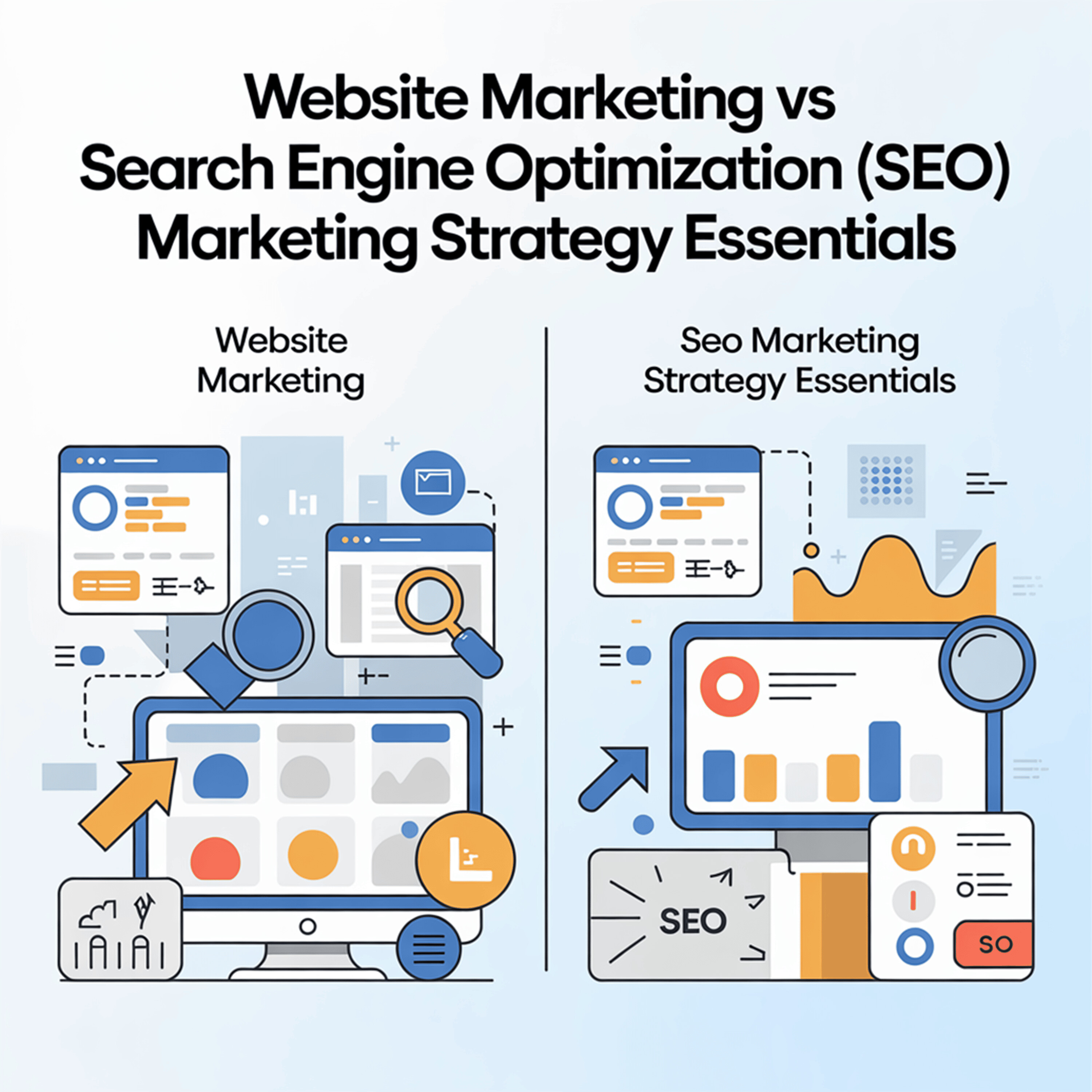
Website marketing represents your brand's total visibility and communication channels online. Your website is your most critical digital asset. It is the definitive online destination where you control the narrative and build direct relationships with your audience.
Show Notes
Website Marketing vs. SEO Marketing: The Complete Business Essentials Guide with Favour Obasi-Ike | Sign up for exclusive SEO insights.
This episode demystifies the relationship between website marketing and Search Engine Optimization (SEO), clarifying the critical distinction between the two. The discussion frames website marketing as the broad, all-encompassing "ecosystem" of a brand's online presence, including email, social media, and advertising.
In contrast, SEO is presented as the tactical, high-performance "engine" that powers a website's visibility and drives targeted traffic within that ecosystem. Through foundational principles, practical strategies, and live consultations with business owners, this guide provides a comprehensive framework for building a powerful and effective digital identity.
--------------------------------------------------------------------------------
Next Steps for Digital Marketing + SEO Services:
>> Visit our Work and PLAY Entertainment website to learn about our digital marketing services.
>> Visit our Official website for the best digital marketing, SEO, and AI strategies today!
--------------------------------------------------------------------------------
Key Takeaways
• Website Marketing is the Ecosystem, SEO is the Engine: Website marketing is the entire universe of your online activities, from email campaigns to social media posts. SEO is the specific, technical practice of optimizing your website to be found by search engines, giving your marketing efforts direction and power.
• Your Website is Your Digital Identity: A website is more than a link or a digital storefront; it is the central hub for establishing your brand's credibility, trustworthiness, and authority, creating a lasting experience for both new and returning visitors.
• Messaging Precedes Marketing: The effectiveness of any marketing tactic hinges on compelling messaging that connects with customer psychology. As demonstrated with the "strawberry" example, great marketing shifts a customer's mindset from a simple "need" to an emotional "want."
• Storytelling Sells, Facts Only Tell: To convert visitors into customers, product descriptions must go beyond listing features and instead create an emotional connection. As speaker Mo advises:
• Technical Health is Non-Negotiable: A website's foundational health depends on more than just load speed and hosting. Consistently publishing fresh content is critical because every update creates a new "tokenized" copy for search engines to crawl. A dormant site gives search engines no reason to return, while an active site signals relevance and forces re-evaluation, directly impacting rankings.
--------------------------------------------------------------------------------
Detailed Episode Notes
1. Defining the Landscape: Website Marketing vs. SEO
To build a successful online presence, it is vital to distinguish between the overarching platform of website marketing and the specific tactics of SEO. Website marketing represents your brand's total visibility and communication channels online. SEO, a critical component within that framework, is the deliberate set of actions taken to ensure your website is discovered by the right audience at the right time. Understanding this difference is the first step toward a coherent and effective digital strategy.
Contrasting Key Concepts
Website Marketing (The Ecosystem)
The Truck and Engine Analogy
The relationship between these two concepts can be understood through a simple yet powerful analogy presented during the episode:
"Think of your website like a truck. Website marketing is the truck itself—it exists, it's present, and it's visible. SEO is the engine that actually moves the truck forward, giving it the power, speed, and direction it needs to reach its destination."
With these foundational definitions established, it's clear that the website itself serves as the strategic center of all marketing efforts.
2. The Strategic Hub: Your Website's Core Function
Your website is your most critical digital asset. It is the definitive online destination where you control the narrative and build direct relationships with your audience. Far more than just a place for transactions, it is the central hub for establishing trust, demonstrating expertise, and solidifying a brand identity that resonates with visitors long after they leave.
The Four Pillars of a Trustworthy Website
For a website to be effective, it must embody four key qualities for every visitor:
1. Credible: The information is accurate, professional, and demonstrates authority.
2. Resourceful: It provides value and answers the questions your audience is asking.
3. Trustworthy: The site is secure, transparent, and operates with integrity.
4. Accessible: It is easy to navigate and available to all users.
Analyzing Visitor Behavior
Every website serves two primary types of visitors: new visitors and returning visitors. Understanding their distinct behaviors through analytics is crucial for optimization. With over 1.1 billion websites online, simply existing is not enough; your site must be engineered to effectively engage both audiences and guide them toward a desired action.
Key Website Components
A modern website is a multimedia platform composed of various elements that search engines index and users engage with:
• Text (including body copy, headlines, and policies)
• Images (with descriptive alt text for accessibility and SEO)
• Audio (e.g., MP3 files for podcasts or sound clips)
• Video (e.g., MP4 files for tutorials or product showcases)
• Documents (e.g., PDFs for white papers or downloadable guides)
A well-structured website, rich with these components, provides the perfect foundation for the tactical work of SEO to drive qualified traffic.
3. Tactical Deep Dive: Activating Your SEO
SEO is the disciplined practice of aligning your website's structure and content with the specific words and phrases your target audience uses in search engines like Google. It is not about tricking algorithms but about creating a valuable and relevant experience that naturally earns high visibility.
This requires a consistent content engine, especially since blogs have a shelf life of 24 months. A single post can provide SEO value for up to two years, demonstrating the long-term ROI of a strategic content plan.
The Content Creation Engine
Generating traffic starts with a simple question-and-answer flow. How do you generate traffic? By kickstarting the engine. How do you kickstart the engine? By creating content. How do you create effective content? By building links through publishing valuable posts like blogs, landing pages, and product pages.
Uncovering SEO Opportunities
A live demonstration in the episode revealed how to find high-intent keywords directly from Google's search suggestions—a reflection of real, frequent user queries.
The strategic takeaway is clear: each of these suggestions represents a distinct user need. A single list of 10 terms can be transformed into 10 to 50 unique media assets, including blog posts, email newsletters, social media updates, and even podcast episodes. This moves SEO from theory to a practical, content-driven reality.
4. Marketing in Action: Live Business Consultations
Applying marketing theory to real-world businesses is the fastest path to clarity. This section analyzes the specific, actionable advice given to two entrepreneurs, providing a blueprint for any product-based business seeking to translate online presence into measurable results.
5. Tools & Resources Mentioned
The selection of a tool, particularly for email marketing, is not just a matter of features but also of technical performance. As discussed in the episode, platforms with strong server infrastructure (like Flodesk's partnership with Amazon SES) can significantly impact email deliverability, a key component of the overall marketing ecosystem.
• AI Idea Generation: ChatGPT, Perplexity, Claude, DeepSeek, Grok
• Email Marketing Platforms: Constant Contact, Mailchimp, Flodesk (preferred), Aweber, Kit, Brevo
• Website Hosting: GoDaddy, BlueHost, Hostinger, SiteGround
• Website Builders: Webador
• Social & Content Platforms: Instagram, Pinterest, YouTube, Clubhouse
• E-commerce: Amazon
See Privacy Policy at https://art19.com/privacy and California Privacy Notice at https://art19.com/privacy#do-not-sell-my-info.















Comments & Upvotes