






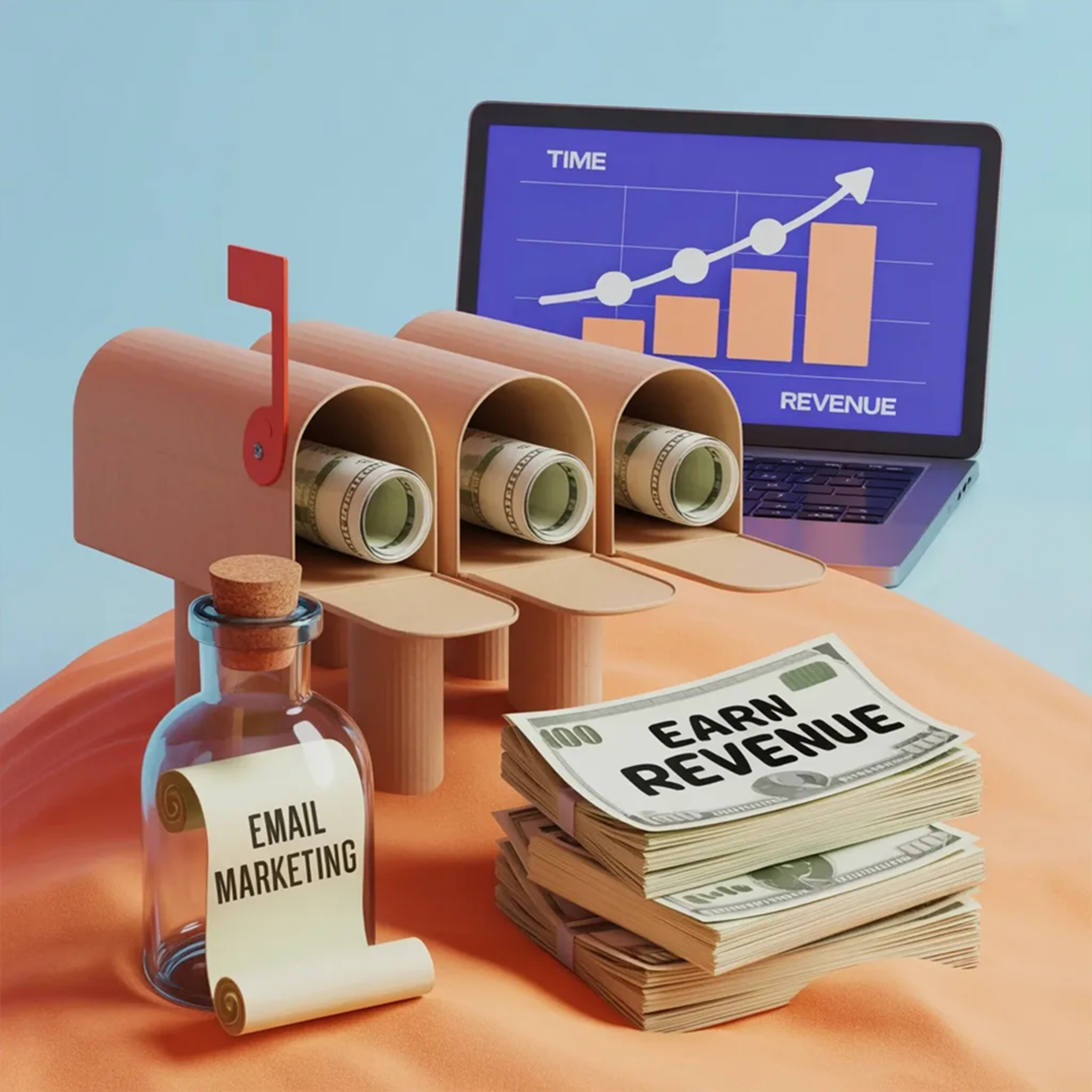
Join Favour Obasi-ike, MBA, MS for a masterclass on email marketing strategies that actually drive revenue. In this session, Favour breaks down the power of segmented email campaigns, explains the metrics that matter, and shares how to build a website-first content strategy that turns subscribers into customers. Learn how to leverage free tools, automate your email sequences, and create long-term relationships with your audience through strategic, data-driven email marketing.
Show Notes
Join Favour Obasi-ike, MBA, MS for a masterclass on email marketing strategies that actually drive revenue. In this session, Favour breaks down the power of segmented email campaigns, explains the metrics that matter, and shares how to build a website-first content strategy that turns subscribers into customers. Learn how to leverage free tools, automate your email sequences, and create long-term relationships with your audience through strategic, data-driven email marketing ROI.
Whether you're just starting with email marketing or looking to optimize your existing campaigns, this episode delivers actionable insights you can implement immediately to boost engagement and generate sustainable revenue.
What You'll Learn
✓ How to use segmented emails to increase revenue and engagement
✓ The difference between click-through rate and click rate (and why it matters)
✓ Why your website is the foundation of successful email marketing
✓ Google's E-E-A-T framework for creating helpful content
✓ How to repurpose one piece of content across multiple channels
✓ Which free tools every email marketer should be using
✓ The "website-first" content strategy that saves time and builds SEO
✓ How to create automated email sequences that work 24/7
Need to Book An SEO Discovery Call for Advertising or Marketing Services?
>> Book a Complimentary SEO Discovery Call with Favour Obasi-Ike
>> Visit Work and PLAY Entertainment website to learn about our digital marketing services
>> Purchase Flaev Beatz Beats Online
Top 7 Email Marketing Best Practices
1. Use Segmented Emails Strategically
Create segments based on subscriber behavior and preferences. Use polls and interactive elements to gather data, then tag links to track which subscribers are interested in which offerings.
2. Build a Helpful, Responsive Website
Your website should be fast-loading, mobile-friendly, and provide genuine value. Focus on Google's E-E-A-T framework: Experience, Expertise, Authority, and Trust.
3. Create Content on Your Website First
Publish content on your website before sharing on social media. This builds your owned digital assets, improves SEO, and gives you more control over distribution.
4. Leverage Email Metrics for Continuous Improvement
Track who opens, clicks, and takes action. Identify your most engaged subscribers and create VIP segments for them. Use this data to refine your messaging over time.
5. Implement Scheduled and Automated Email Sequences
Set up automated sequences that trigger based on subscriber actions. Create welcome series, nurture campaigns, and re-engagement flows that work around the clock.
6. Repurpose Content Across Multiple Formats
Take one long-form piece and break it into blog posts, social media updates, podcast episodes, videos, and email newsletters. Maximize your content creation efforts.
7. Focus on Long-term Relationship Building
Not everyone opens emails the day you send them. Be consistent with your schedule, provide ongoing value, and build trust over time rather than chasing quick sales.
Key Metrics to Track
Deliverability Rate - Percentage of emails reaching subscriber inboxes
Open Rate - Percentage of delivered emails that get opened
Click Rate - Percentage of delivered emails with link clicks
Click-Through Rate (CTR) - Percentage of opened emails with link clicks
Conversion Rate - Percentage completing your desired action
Podcast Episode Timestamps
[00:00] Episode introduction: Email marketing best practices that earn revenue
[00:40] Why segmented emails are the #1 revenue driver
[03:06] How to create segments triggered by scheduled emails
[03:37] Example: Segmenting by in-person vs. virtual event preferences
[06:00] Using polls to understand what your audience really wants
[07:00] Revenue starts at the beginning: building systems for MRR
[08:00] Click-through rate vs. click rate explained
[09:00] Identifying and segmenting your most engaged subscribers
[10:00] Tracking email opens and clicks consistently
[10:30] Creating VIP segments for highly engaged subscribers
[14:00] Re-engaging inactive subscribers through targeted campaigns
[15:00] Email deliverability and its impact on revenue
[17:00] Understanding spam filters and how to avoid them
[18:00] Email authentication: SPF, DKIM, and DMARC
[20:00] Real case study: Client ranking page one for competitive keywords
[21:42] Technical SEO: indexing, blogs, location pages, schema markup
[23:00] Email marketing as direct response marketing
[24:00] Why not everyone opens emails immediately (and that's okay)
[25:00] Best Practice #1: Have a helpful, responsive website
[25:32] Google's E-E-A-T framework: Experience, Expertise, Authority, Trust
[26:22] You have less than 10 seconds to make an impression
[27:00] The "website-first" content strategy
[27:22] Free analytics tools: Google Search Console, GA4, Bing, Microsoft Clarity
[28:00] Repurposing one article into multiple content formats
[30:00] Maximizing content value through strategic repurposing
[32:00] Creating content pillars and topic clusters
[33:00] Planning content calendars aligned with email campaigns
[35:00] Balancing evergreen content with timely topics
[37:00] Creating lead magnets that attract quality subscribers
[39:00] A/B testing email subject lines and content
[40:00] Overview of popular email marketing platforms
[41:00] Mailchimp: features, pricing, and best use cases
[42:00] Constant Contact for small businesses and nonprofits
[43:00] Brevo (formerly Sendinblue): affordable with SMS capabilities
[44:00] HubSpot: comprehensive CRM and marketing automation
[45:00] Choosing the right platform for your business needs
[46:00] Free tier options and when to upgrade
[50:00] Advanced segmentation for e-commerce businesses
[51:00] Using behavioral triggers to increase conversions
[52:00] Email in omnichannel marketing strategies
[53:00] Measuring ROI from email campaigns
[54:00] Common email marketing mistakes to avoid
[57:00] Recap of key best practices
[59:00] Closing remarks and next session announcement
[59:29] Tomorrow's topic: Search Engine Marketing & SEO Best Practices (11 AM Central)
Tools & Resources Mentioned
Email Marketing Platforms: Flodesk >> Sign up and Get 50% Off
Analytics Tools: Google Search Console, Google Analytics (GA4), Bing Webmaster Tools, Microsoft Clarity, Fathom Analytics, Matomo Analytics
Other Tools: Eventbrite, Pinterest
See Privacy Policy at https://art19.com/privacy and California Privacy Notice at https://art19.com/privacy#do-not-sell-my-info.
















Comments & Upvotes