




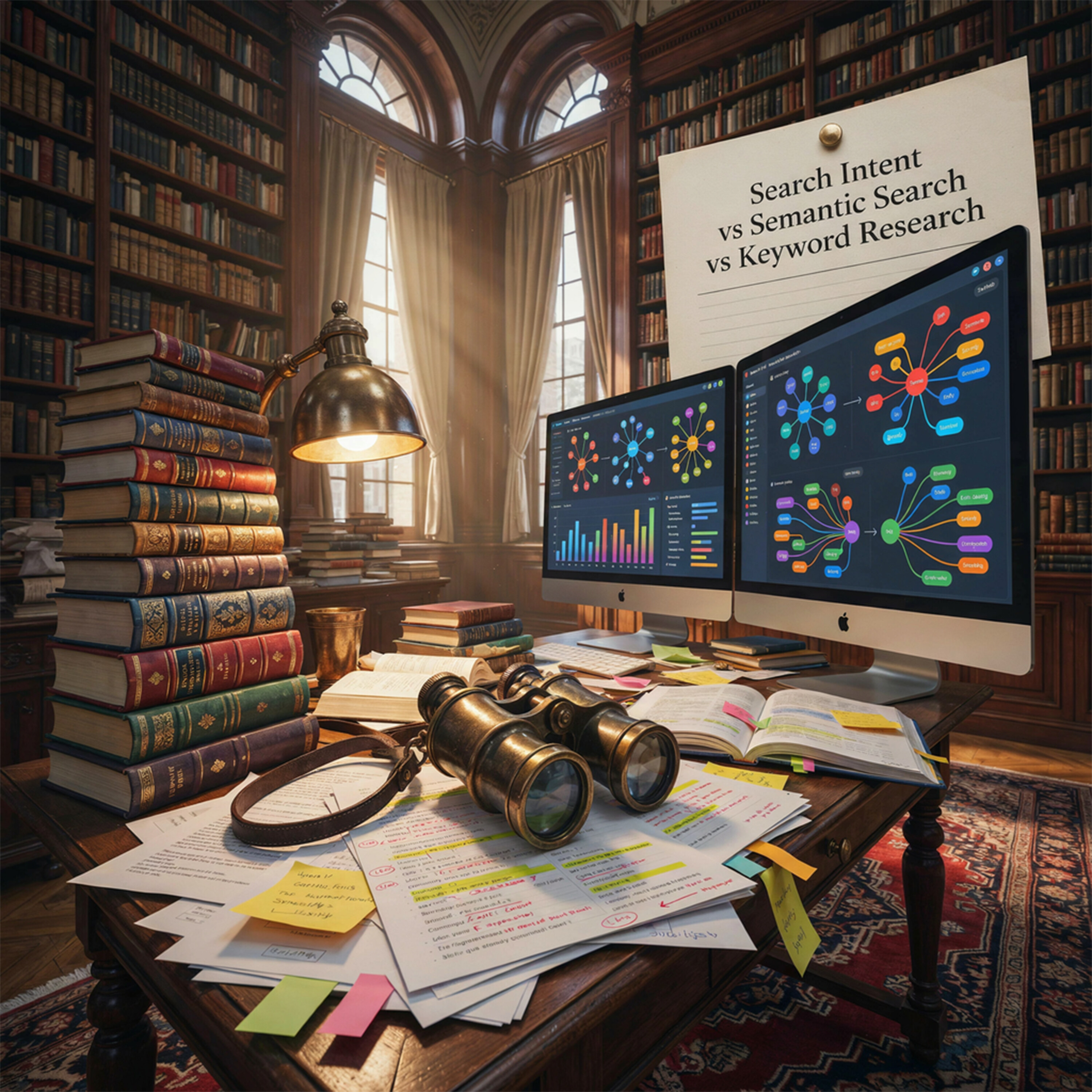
Today’s conversation dives deep into three powerful pillars of online visibility: search intent, semantic search, and keyword research. You’ll hear Favour Obasi-ike, MBA, MS talk about the mechanics behind how people find information, the role of intentional searches, and the evolving ways AI processes and retrieves content. Whether you’re a business owner eager to optimize your website or just curious about what happens behind the scenes when you type a query, this episode unpacks everything you need to know to boost your reach and relevance online.
Show Notes
Today’s conversation dives deep into three powerful pillars of online visibility: search intent, semantic search, and keyword research.
You’ll hear Favour Obasi-ike, MBA, MS talk about the mechanics behind how people find information, the role of intentional searches, and the evolving ways AI processes and retrieves content. Whether you’re a business owner eager to optimize your website or just curious about what happens behind the scenes when you type a query, this episode unpacks everything you need to know to boost your reach and relevance online.
Get ready for actionable tips and real-world examples that will help you harness the power of smarter searches.
Summary & Learnings
Understand the Four Mechanics: Indexing, query processing, retrieval, and ranking are foundational for getting discovered in search (05:33).
Search Intent Drives Results: Recognize user intent—informational, navigational, commercial, transactional—for better keyword targeting (18:49).
Structure Your Keyword Research: Use broad to narrow targeting. Utilize phrase and exact match to control relevance; negative keywords exclude unwanted traffic (37:46).
Optimize Content Types: Incorporate multimedia (text, image, audio, video) and embed relevant posts for better reach (24:40, 25:58).
Prioritize UX: Easy, clear booking and navigation processes convert more clients (32:20).
Refresh Content Regularly: Each page needs updates at least every 24 months to stay competitive (56:48).
Key Moments & Timestamps
- What are indexing, query processing, retrieval, ranking?
- Thorough breakdown of the fundamental mechanics behind keyword search and discovery:05:33
- Defining Search Intent
- Understanding what “search intent” means and how it guides customer behavior:09:40
Types of Search Intent:
- Informational
- Navigational
- Commercial
- Transactional
- Explained with examples: 18:49
Types of Keyword Matches
- Broad match
- Phrase match (using quotation marks)
- Exact match (using square brackets)
- Negative keywords (filter out irrelevant traffic)
- Step-by-step guidance: 29:06 and 37:46
Importance of Easy User Experience
Streamlining booking and why simplicity beats complexity: 32:20
Content Formats for SEO
Why using text, image, audio, and video enhances discovery: 24:40
Embedding as SEO Strategy
How embedding social posts boosts indexing: 25:58
Refresh Cycle for Web Pages
Why every web page needs regular updates—24-month SEO lifespan: 56:48
Who Is This Episode For?
This episode is ideal for entrepreneurs, business owners, marketers, service providers, and anyone seeking to understand the nuanced differences between search intent, semantic search, and keyword research. If you want practical advice on increasing your visibility online and actionable SEO strategies to convert searchers into customers, this is for you.
For more support, listeners are encouraged to book a call, or subscribe to upcoming training and resources.
FAQs
Q: What’s the difference between search intent, semantic search, and keyword research?
A: Search intent is understanding why someone is searching. Semantic search considers context/meaning alongside keywords. Keyword research identifies what terms people actually use. Each approach builds on the other for effective SEO.
Q: How do keyword matches influence my results?
A: Broad matches cast a wide net. Phrase matches require the user search to include an exact phrase. Exact matches show your result only for the exact query. Negative keywords prevent unwanted clicks (e.g., blocking “free” if you sell paid services).
Q: How often should I update my website?
A: Pages should be refreshed every 24 months to maintain SEO performance (56:48).
Action Steps
- Audit Your Website: Ensure every page is indexed and updated within 24 months (56:48).
- Clarify Your Target Intent: Map your major pages to specific intents (informational, navigational, commercial, transactional).
- Do Keyword Research: Use SEMrush or Google Keyword Planner to explore broad, phrase, and exact match keywords (47:37).
- Implement Negative Keywords: Filter out irrelevant or unqualified traffic, especially in paid ads (41:16).
- Upgrade Your Content: Add images, audio, and video; embed social media posts for context (25:58).
- Simplify Your User Journey: Make booking and buying as frictionless as possible (32:20).
- Book a Consultation: If you need 1:1 guidance, schedule a call (49:24).
Ready to Rank? Book Your SEO & Web Dev Services Today
🧠 Book SEO Services with Favour Obasi-ike: https://calendly.com/flaevbeatz/marketing-strategy-zoom-call
🧠 Read Articles: https://www.playinc.online/newsfeed
🧠 We Don't PLAY Podcast: https://wedontplaypodcast.com
🧠 Favour Obasi-ike's Quick Links: https://zaap.bio/flaevbeatz
Explore Free Marketing Resources to Grow Your Business
📑 SEO: https://www.playinc.online/newsfeed/categories/seo
📑 Clubhouse Audio: https://www.playinc.online/newsfeed/categories/clubhouse
📑 Pinterest SEO: https://www.playinc.online/newsfeed/categories/pinterest
📑 Marketing: https://www.playinc.online/newsfeed/categories/marketing
📑 Podcast: https://www.playinc.online/newsfeed/categories/podcasts
📑 Social Media: https://www.playinc.online/newsfeed/categories/social-media-tips
📑 Billboards: https://www.playinc.online/newsfeed/categories/billboards
📑 Work and PLAY Entertainment Newsfeed: https://www.playinc.online/newsfeed/categories/newsfeed
See Privacy Policy at https://art19.com/privacy and California Privacy Notice at https://art19.com/privacy#do-not-sell-my-info.















Comments & Upvotes