






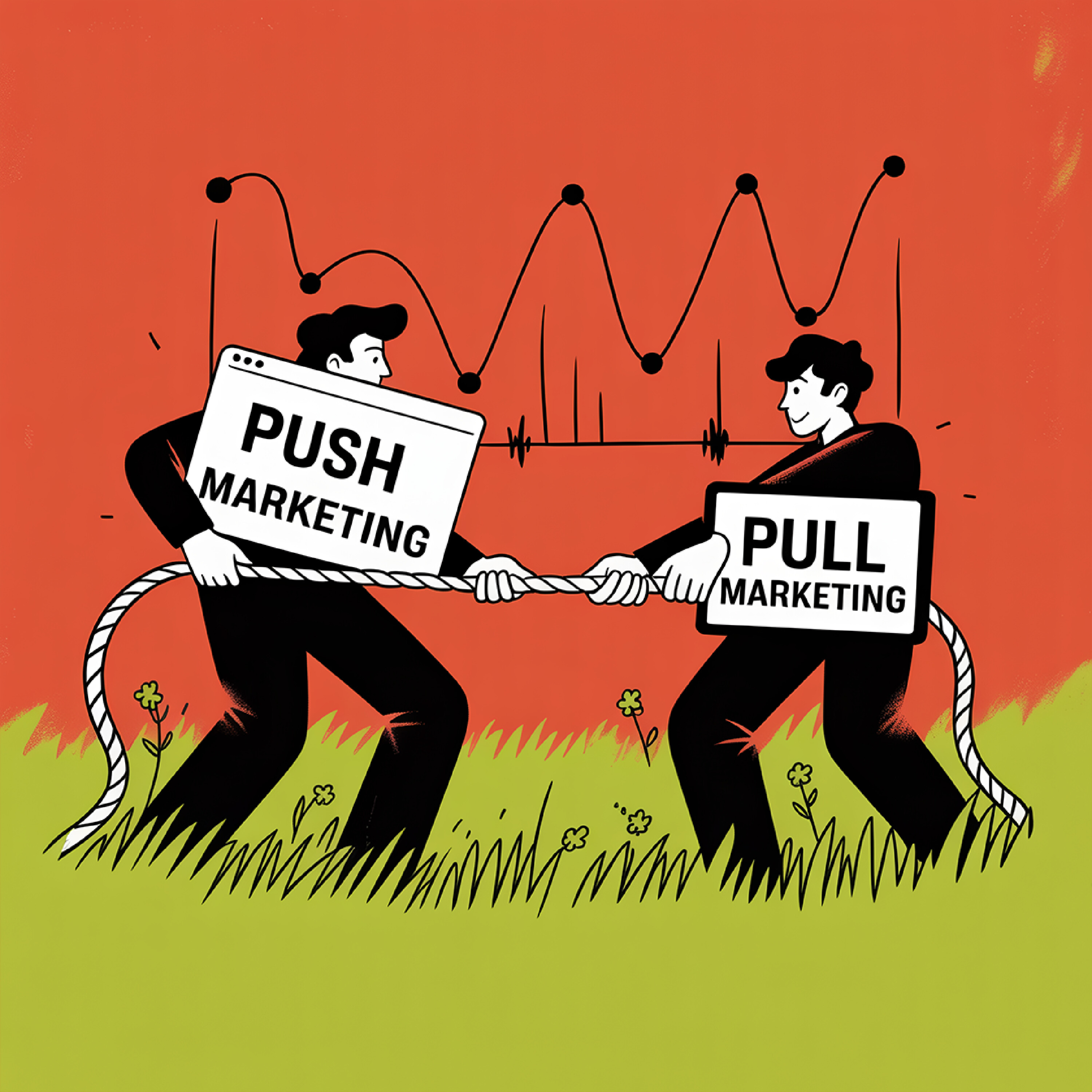
Favour Obasi-ike, MBA, MS breaks down push (outbound) vs. pull (inbound) marketing. Pull marketing (social media, SEO, content) attracts audiences long-term via consumer-driven engagement. Push marketing actively promotes products for immediate sales but can backfire if poorly targeted. Using interactive examples (e.g., sending gardening tool emails to a Pinterest list), Favour highlights the need to understand audience pain points. He also covers data ownership (first-party vs. third-party) and shares a client success story of scaling to 1M monthly Pinterest views.
Show Notes
Favour Obasi-ike, MBA, MS breaks down push (outbound) vs. pull (inbound) marketing. Pull marketing (social media, SEO, content) attracts audiences long-term via consumer-driven engagement. Push marketing actively promotes products for immediate sales but can backfire if poorly targeted. Using interactive examples (e.g., sending gardening tool emails to a Pinterest list), Favour highlights the need to understand audience pain points. He also covers data ownership (first-party vs. third-party) and shares a client success story of scaling to 1M monthly Pinterest views.
Who is this for?
Business owners, entrepreneurs, digital marketers, and content creators looking to understand inbound (pull) vs. outbound (push) marketing. It's valuable for building long-term brand loyalty, optimizing social media and SEO, and targeting audiences effectively without being spammy.
Ready to Rank? Book Your SEO & Web Dev Services Today
🧠 Visit our Official Work and PLAY Entertainment Website | Discover Best SEO Marketing Services
🧠 Purchase Flaev Beatz Beats Online
🧠 Favour Obasi-ike Quick Links
🧠 Start Recording your Podcast with Riverside Today | Sign Up with My Affiliate Link Here
Explore Free Marketing Resources to Grow Your Business
📑 Read about Clubhouse Audio Topics
📑 Read about Pinterest SEO Topics
📑 Read Work and PLAY Entertainment Newsfeed
Key Moments & Timestamps
- 00:00 - Intro: "We Don't Play" podcast; push vs. pull marketing overview.
- 02:12 - Defining outbound (push) vs. inbound (pull) marketing.
- 04:16 - Social media and SEO as primary examples of pull marketing.
- 07:23 - SEO timeline (4 weeks to 24 months) and AI's growing impact by 2027.
- 22:47 - Push marketing economics: Low-cost items ($1-$99) and volume conversions.
- 25:35 - Scenario: Negative impact of irrelevant push emails (gardening tools to Pinterest list).
- 01:04:36 - First-party vs. third-party data: Platform ownership (YouTube/Pinterest vs. Instagram).
- 01:11:30 - Importance of pull marketing before push: Building connection before the sale.
- 01:53:50 - Celeste's "aha moment": Identifying recurring problems to define target audiences.
- 01:58:29 - Client success: Scaling a tool company to 1M Pinterest views and $40k/week sales.
FAQs
Q: What is the main difference between push and pull marketing?
A: Push (outbound) actively promotes products for immediate sales (emails, ads). Pull (inbound) draws consumers naturally over time via valuable content, SEO, and social media.
Q: Why is pull marketing better for long-term growth?
A: It builds brand loyalty and trust. Consumers actively seek the info, making them more engaged, leading to higher conversions and lower unsubscribe rates.
Q: What happens if push marketing isn't targeted correctly?
A: Irrelevant offers confuse the audience, damage trust, and result in high unsubscribe rates or spam reports.
Q: Which platforms allow me to own or natively download my content?
A: YouTube and Pinterest allow native downloads of uploaded content. Instagram does not allow native downloading of uploaded reels/images from the dashboard.
Action Steps
- Audit Marketing Mix: Prioritize pull marketing (content, SEO) to build trust before using push marketing (sales emails).
- Know Your Audience: Identify specific pain points to ensure messaging is relevant and avoids the "spam" effect.
- Leverage First-Party Data: Drive traffic to platforms you control (website, email list) rather than relying solely on rented social media.
- Optimize for Search: Invest in SEO and search-engine platforms like Pinterest or YouTube for long-term discoverability.
- Test & Refine: Continuously test emails and offers to maintain a seamless UX and low unsubscribe rate (under 0.3%).
See Privacy Policy at https://art19.com/privacy and California Privacy Notice at https://art19.com/privacy#do-not-sell-my-info.















Comments & Upvotes